Ultra-intelligent sync built for the edge
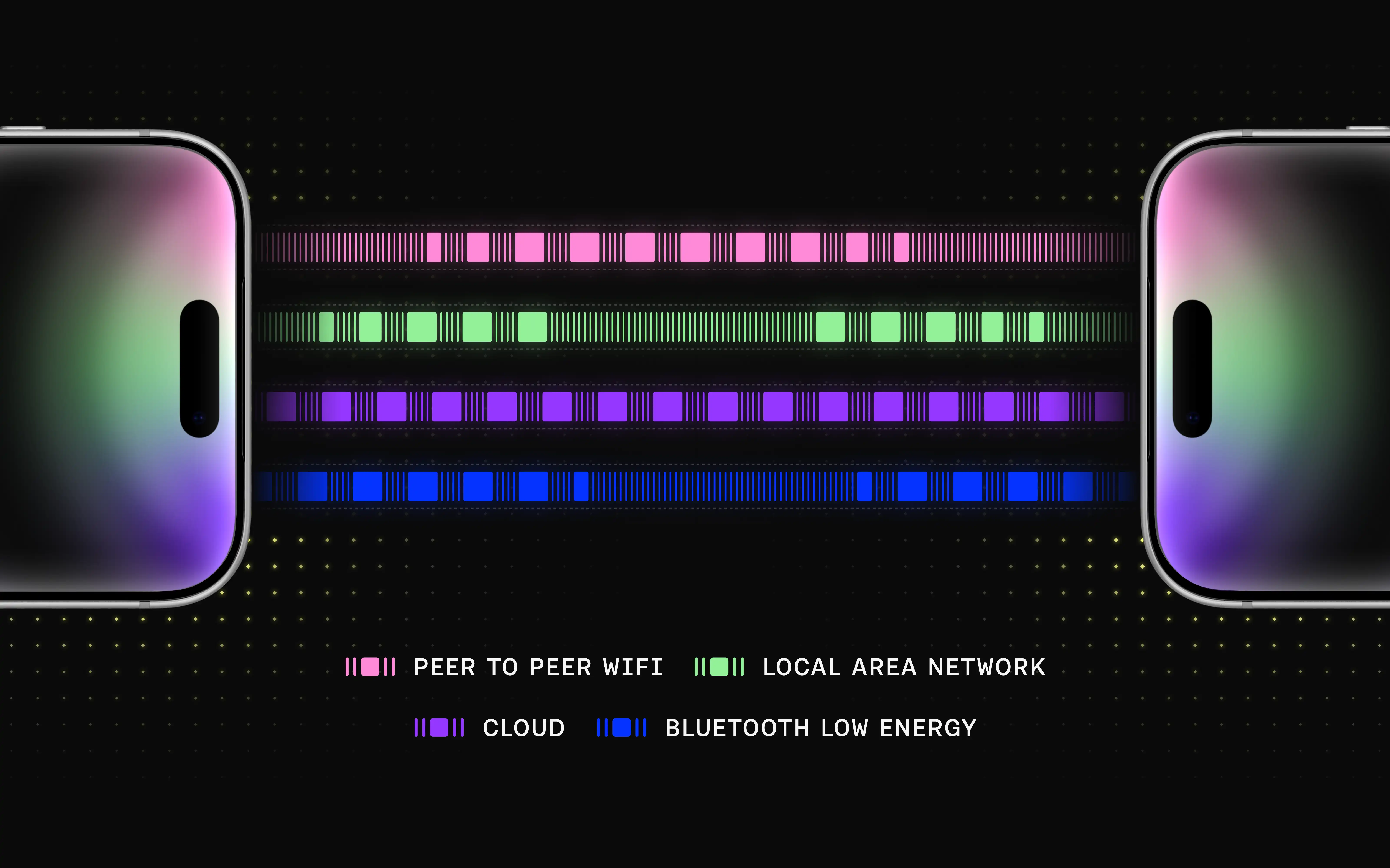



- Single network transport = single point of failureIf that connection is slow, severed, or the bandwidth is saturated, mobile workflows grind to a halt.
- Mobile networking must adapt to an ever-changing environmentMobile devices constantly move in and out of connectivity requiring complex solutions for offline, resyncing, and conflict resolution.
- Document flooding bogs down edge networksScaling sync over transports of varying reliability leads to slow data sync, outdated queries, incorrect data, and broken operations.
- Server-controlled sync constrains scalabilityAdding more devices means scaling your WiFi infrastructure, a costly cycle that still leaves you vulnerable to outages and dead zones.

- Multi-transport mesh networking provides redundancyDitto supports multiple transport types concurrently: traditional WiFi, Cellular, Bluetooth LE, LAN, and P2P WiFi (think airdrop)
- Ditto's multiplexer dynamically switches between transportsAutomatically switch based on network conditions, optimizing for speed and ensuring zero data duplication, data loss, or conflicts.
- Delta sync saves on bandwidthOnly sync the property-level changes, not the full document. This is key to enabling low bandwidth transports like Bluetooth LE.
- Decentralization and CRDTs ensures enterprise edge successChanges propagate through mesh networks with mathematical guarantees of consistency, converging without server coordination.


Enterprise Ready Peer-to-Peer Sync
Ditto utilizes multiple connection technologies including Bluetooth Low Energy, Peer-to-Peer Wi-Fi, and Local Area Network to reliably sync data without the internet and without unnecessary network hardware.

Ad-hoc device discovery and automatic mesh creation without pre-configuration
Developer friendly and fully cross-platform
Sync up to 130 m / 425 ft and even further with multihop


The Multiplexer: Dynamically switch active transports optimizing based on environment
Traditional network technologies force developers to choose between competing priorities. With Ditto, you get the best of all worlds.

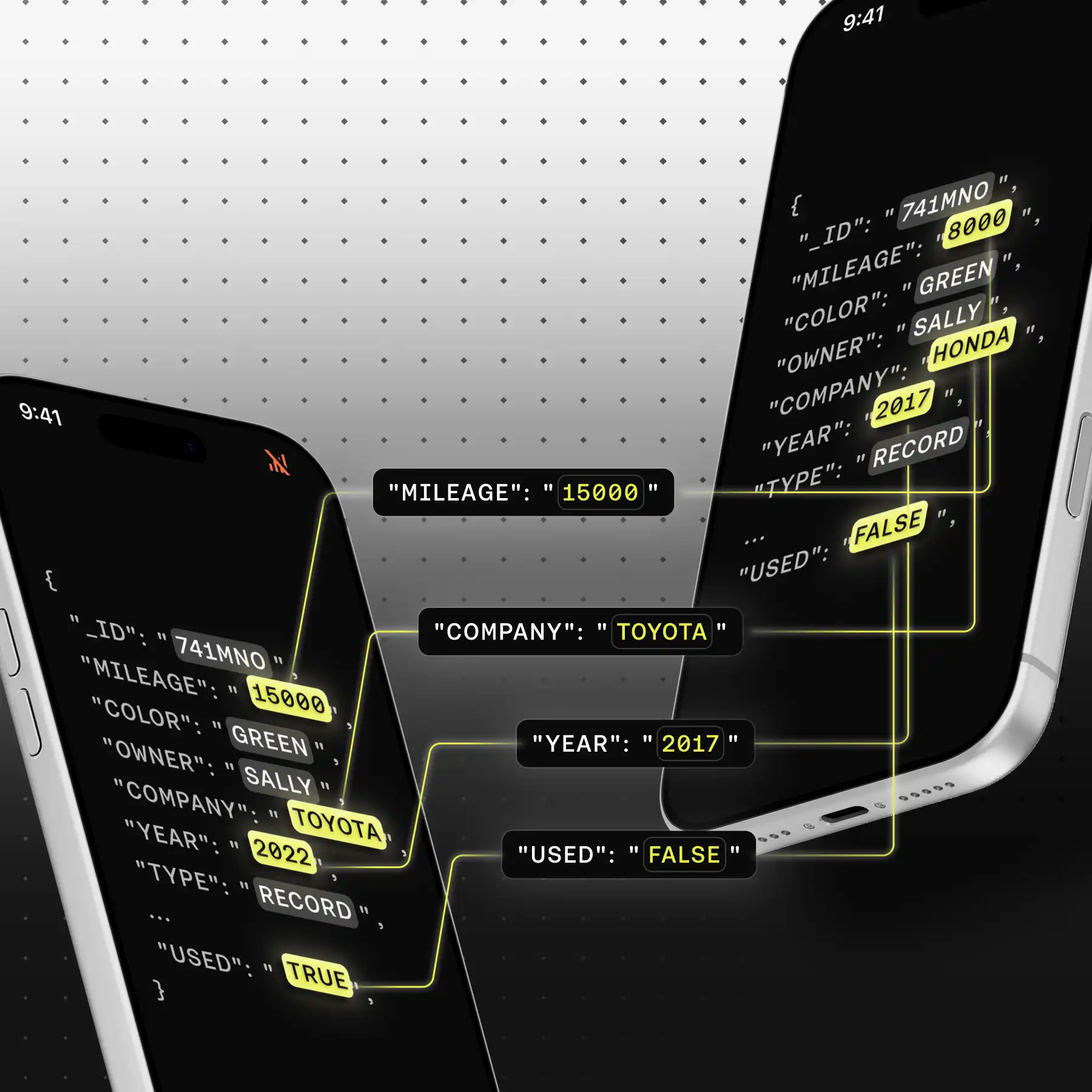

Multihop sync ensures mobile workflows thrive in any environment
Multihop sync is the process of passing data from one connected peer to another enabling fast, long-range data transfer without hardware reliance.



Enterprise Success Across Edge and Cloud
Capture
Collect data reliably from mobile and edge devices, even when completely offline.
Reconcile & Distribute
Guaranteed sync and conflict resolution across the edge and to the cloud via mesh technology.
Operationalize
Reliably expose clean, trustworthy edge data to backend analytics and AI systems.
Unlike typical home networks that use a star topology, where all devices connect to a central router or access point, a mesh network is decentralized. Each device can connect directly to multiple nearby devices, creating a web of interconnected nodes rather than relying on a single hub. The ad-hoc nature means that devices can connect dynamically without pre-configuration.
When you layer peer-to-peer sync on top of this mesh architecture, you gain built-in redundancy and resilience. Data can flow through multiple pathways between devices, so if one connection fails, communication automatically routes through alternative paths. This eliminates single points of failure and keeps your application operational even when individual network links go down.
Enterprises today face a harsh reality: traditional data synchronization breaks down the moment network conditions become unpredictable. Ditto eliminates single points of failure for critical edge systems by operating across all available transports simultaneously, enabling sync even when offline. When maintenance crews move beyond WiFi range, Ditto automatically switches to peer-to-peer connections between nearby devices. If those devices separate, Bluetooth LE maintains sync for essential updates.
Ditto's Multiplexing technology seamlessly switches between active transports such as WiFi, Bluetooth LE, peer-to-peer WiFi connections, and cellular networks in real-time. Instead of hoping one network stays reliable, Ditto maintains multiple simultaneous connections and automatically selects the optimal path for every data transfer.
Yes. All devices sharing the same query will sync with each other in the mesh, regardless of if they are directly connected via a peer-to-peer transport. This also means that just one connected device within a mesh enables all devices to interact with the cloud. See the above platform architecture or learn more here.
This depends on the primary transport that is connecting 2 or more devices.
WiFi (LAN): the full speed of your connection, typically 1 gigabyte of data in times as low as 8 seconds.
P2P WiFi Direct (think Airdrop technology): similar to WiFi speeds
Bluetooth LE: typically 20 kB/second (however, if you’re using a device that is below Android 10, then Ditto will use BLE GATT which is only 4 kB/second.)
Ditto uses CRDTs (Conflict-free Replicated Data Types), which provide automatic, deterministic conflict resolution. Unlike traditional databases using last-write-wins, CRDTs are mathematically designed to converge to the same state regardless of operation order. Changes from different devices merge automatically and correctly for common data patterns. This means that conflicts are automatically resolved, merged, and synced across peers without the need for coordination or validation from a centralized authority. Learn more about Ditto’s CRDT.
Enabling devices to talk over IP-based transports as well as peer-to-peer sync allows devices to sync directly when the cloud becomes unavailable. With support for Bluetooth Low Energy, Local Area Network, or Peer-to-Peer WiFi, this capability is invaluable in restaurants, warehouses, manufacturing plants, hospitals, retail stores, airplanes, and many more environments where internet is limited but devices are nearby. Devices automatically discover peers and sync data directly—often faster than routing through distant cloud servers. If one device has internet, it bridges others, ensuring data propagates throughout your environment.
Ditto's offline-first, embedded database stores data in structured JSON-like document objects, similar to NoSQL. It runs within your app (on mobile, web, IoT, etc.), allowing you to read and write data even without an internet connection. Each instance of the Edge SDK maintains its own local datastore, so the app remains fully functional offline and can share data locally. Learn more here.
Encrypted at the transport layer using version 1.3 of the Transport Layer Protocol (TLS), clients and servers are mutually authenticated prior to transmission of API and peer-to-peer access credentials. The use of mutually authenticated TLS (mTLS) mitigates potential risks posed by outside attackers attempting to masquerade as a valid API endpoint or peer in the mesh network to steal information.
Additionally, Ditto workloads and services are tightly controlled in a containerized Kubernetes environment.
Ditto takes a comprehensive approach to offline-first architecture, providing full support for all major platforms, including Swift, Kotlin, React Native, Flutter, Kotlin Multiplatform, Rust, C++, .NET, Javascript, Java and more.
