Make offline the default, not an afterthought
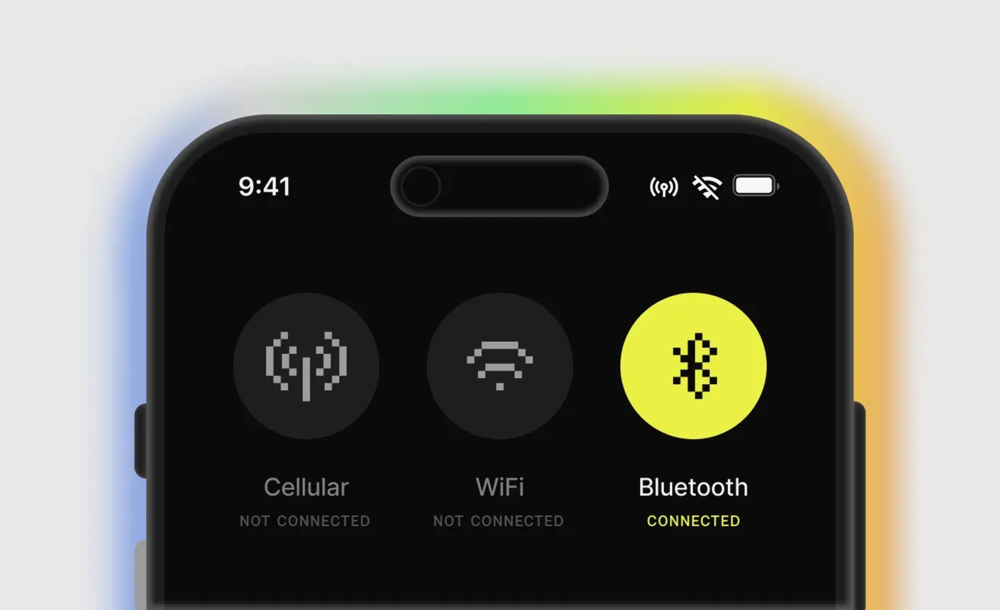



- Mobile devices are always on the moveYou can’t predict when network hiccups, cloud outages, server issues and more will occur.
- Even short disconnection leads to latency and performance issuesWhy do local interactions require round-trips to distant servers?
- Apps rely on remote APIs or cloud serverless functionsBusiness logic requires constant server connectivity for operations.
- Server-side conflict resolution is complexCentralized merge logic creates brittle code and leads to poor observability and reliability.

- Offline-first with Ditto means always-onLocal data reading and writing regardless of connectivity.
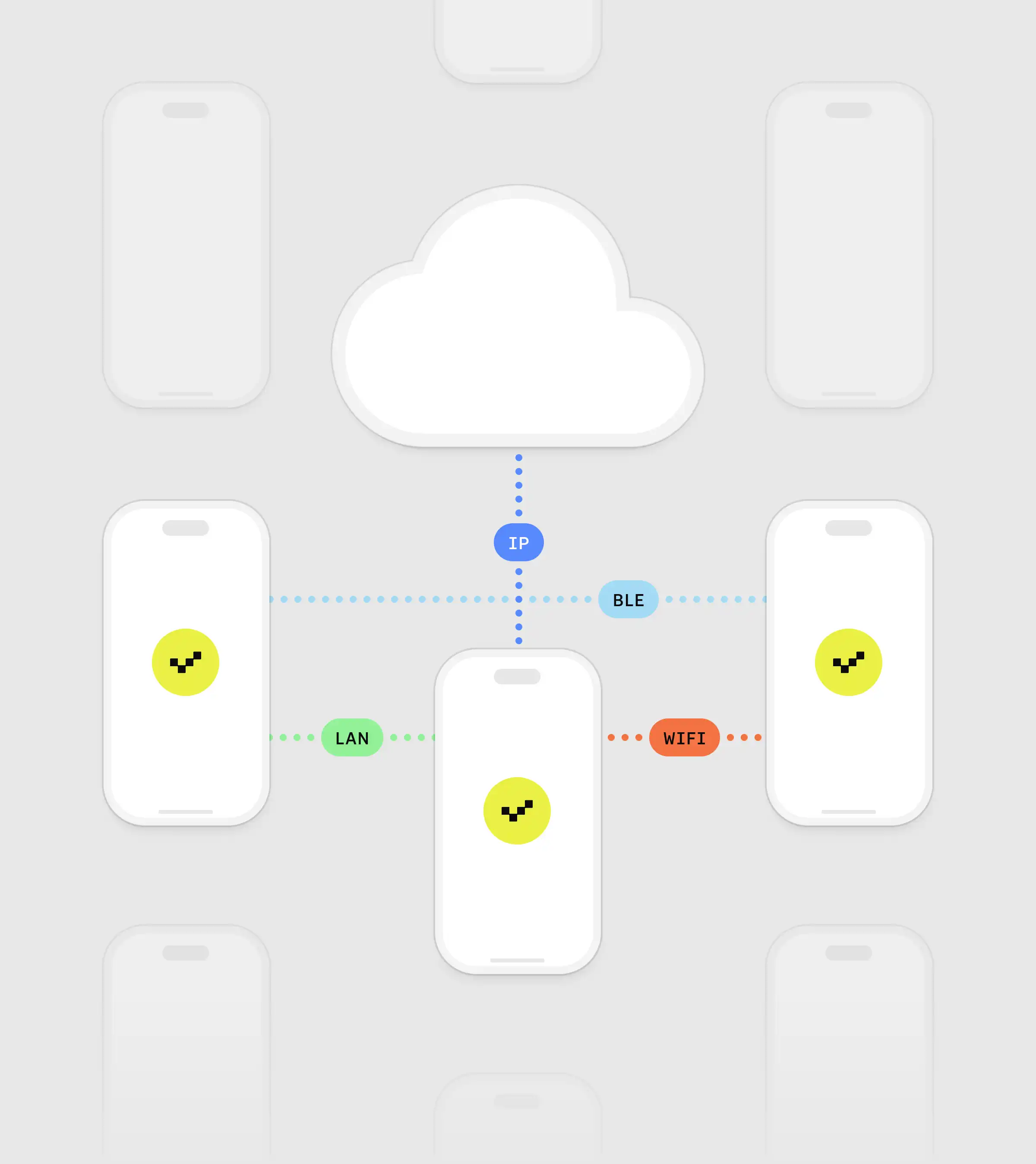
- Smarter sync for the real worldStore locally first, then automatically sync whenever the cloud or local peers are available.
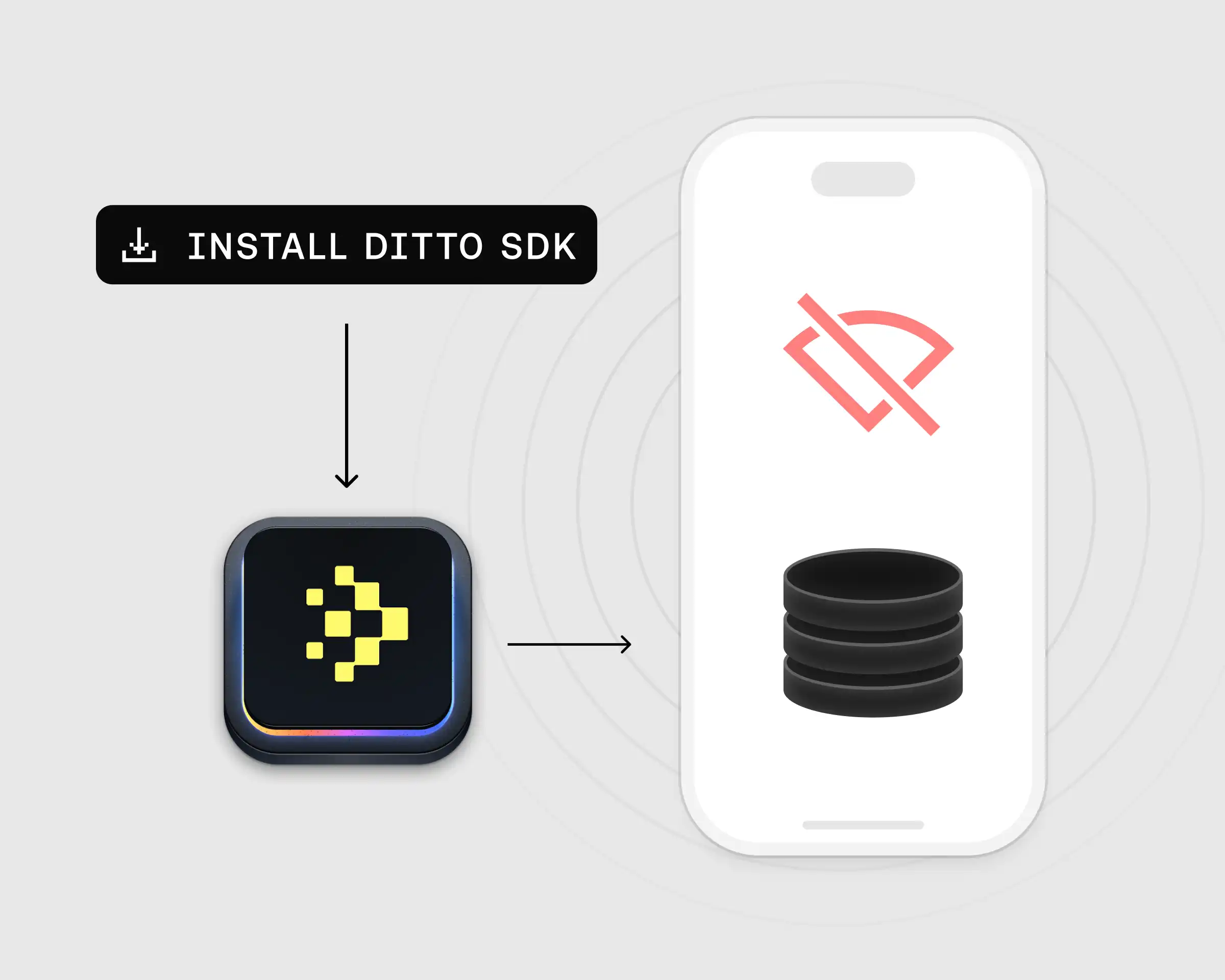
- Move your data layer onto the deviceApplication logic executes locally without remote API calls or serverless functions.
- Conflict resolution that makes senseLocal merge logic (powered by CRDTs) ensures conflict-free, transparent resolution.


.png)




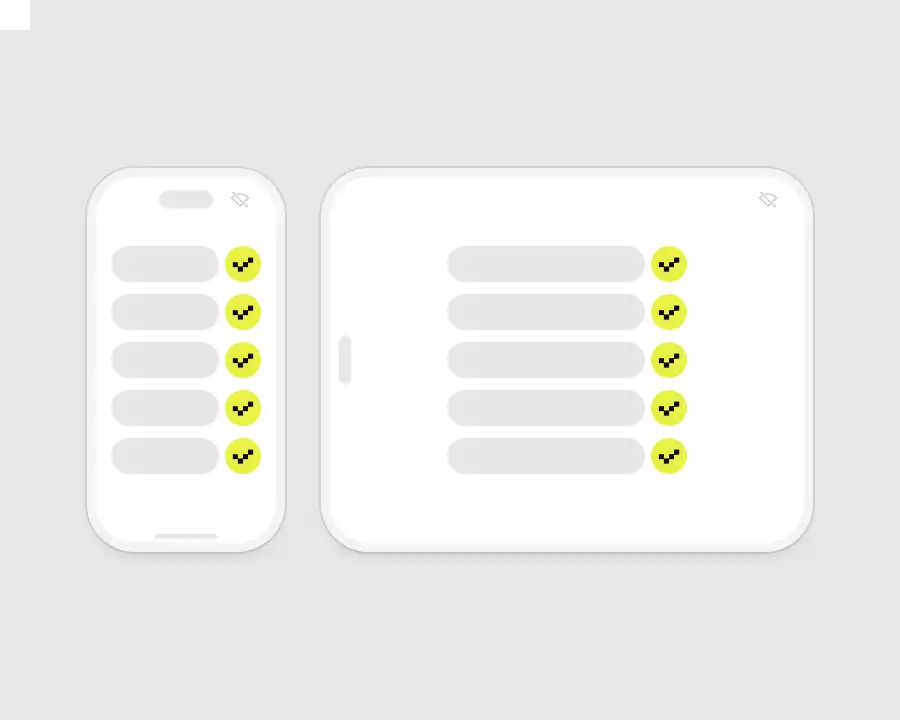
Local data operations deliver consistent millisecond performance. Execute queries, sync APIs, transactions, and business logic without server dependencies.
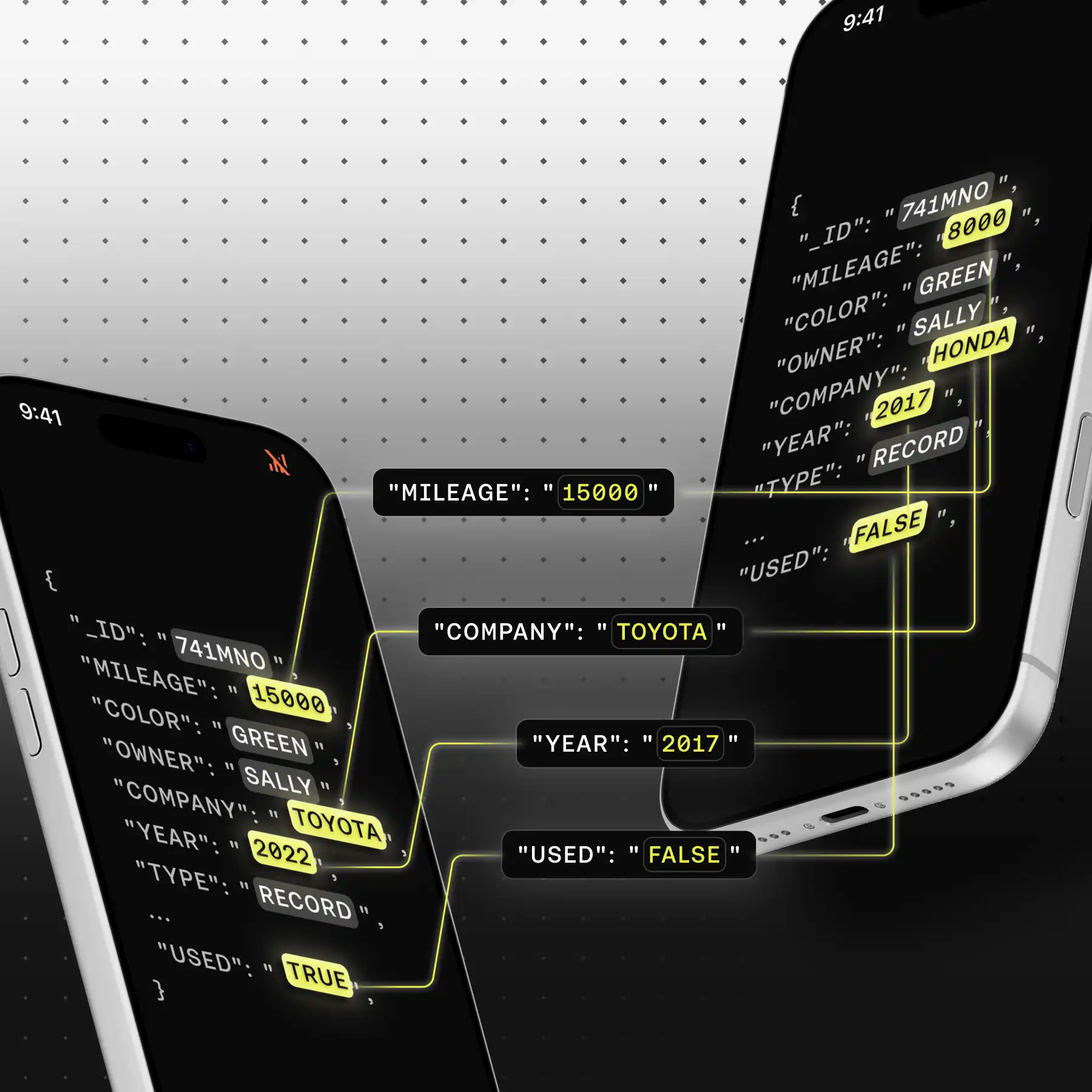
Ditto integrates Conflict-Free Replicated Data Types (CRDTs) directly into its sync engine to ensure every device converges to the same final state without requiring server arbitration.

Ditto's Edge SDK is platform agnostic across iOS, Android, Windows, and Linux alongside support for cross-platform frameworks like Flutter and React Native.

Connectivity doesn't just for remote use-cases. Even in metropolitan areas, mobile connectivity is unreliable. Employees constantly move between areas with different signal strengths, work in basements, fulfillment centers or patios where WiFi struggles and cellular signals don't penetrate. Continuous dropped connections throughout the day creates friction that compounds across hundreds of daily interactions, eroding revenue and operational efficiency. Offline-first architecture eliminates these disruptions entirely, ensuring operations continue smoothly and employees and customers alike never realize the system is down.
Offline-first architecture means your application is designed to function without internet connectivity, treating network availability as an enhancement rather than a requirement. Unlike apps with offline "modes" or temporary caching, offline-first stores data locally in a full embedded database, processes all operations on-device, and syncs changes when connectivity allows. This delivers fast, reliable experiences whether users are online, offline, or experiencing poor connectivity.
While devices have storage limits, we can help you keep on-device databases lean by storing only business-critical data needed for operations. Each device should only sync only the data relevant to that user or location—for example, a retail associate only needs inventory for their store, not the entire chain. This focused approach ensures fast sync times, real-time updates, and efficient device performance. Historical data, analytics, and records not needed for daily operations can be stored in your backend systems while devices maintain the working dataset required for immediate operations.
Ditto uses CRDTs (Conflict-free Replicated Data Types), which provide automatic, deterministic conflict resolution. Unlike traditional databases using last-write-wins, CRDTs are mathematically designed to converge to the same state regardless of operation order. Changes from different devices merge automatically and correctly for common data patterns. This means that conflicts are automatically resolved, merged, and synced across peers without the need for coordination or validation from a centralized authority. Learn more about Ditto’s CRDT.
Enabling devices to talk over IP-based transports as well as peer-to-peer sync allows devices to sync directly when the cloud becomes unavailable. With support for Bluetooth Low Energy, Local Area Network, or Peer-to-Peer WiFi, this capability is invaluable in restaurants, warehouses, manufacturing plants, hospitals, retail stores, airplanes, and many more environments where internet is limited but devices are nearby. Devices automatically discover peers and sync data directly—often faster than routing through distant cloud servers. If one device has internet, it bridges others, ensuring data propagates throughout your environment.
Ditto's offline-first, embedded database stores data in structured JSON-like document objects, similar to NoSQL. It runs within your app (on mobile, web, IoT, etc.), allowing you to read and write data even without an internet connection. Each instance of the Edge SDK maintains its own local datastore, so the app remains fully functional offline and can share data locally. Learn more here.
Encrypted at the transport layer using version 1.3 of the Transport Layer Protocol (TLS), clients and servers are mutually authenticated prior to transmission of API and peer-to-peer access credentials. The use of mutually authenticated TLS (mTLS) mitigates potential risks posed by outside attackers attempting to masquerade as a valid API endpoint or peer in the mesh network to steal information.
Additionally, Ditto workloads and services are tightly controlled in a containerized Kubernetes environment.
Ditto takes a comprehensive approach to offline-first architecture, providing full support for all major platforms, including Swift, Kotlin, React Native, Flutter, Kotlin Multiplatform, Rust, C++, .NET, Javascript, Java and more.
