Published OnDecember 10, 2025December 8, 2025
How a 400-Restaurant Franchise Group Thinks About Technology Investment
Peer-to-Peer Insights with Trevor Fitzgerald, SVP of IT at WKS Restaurant Group


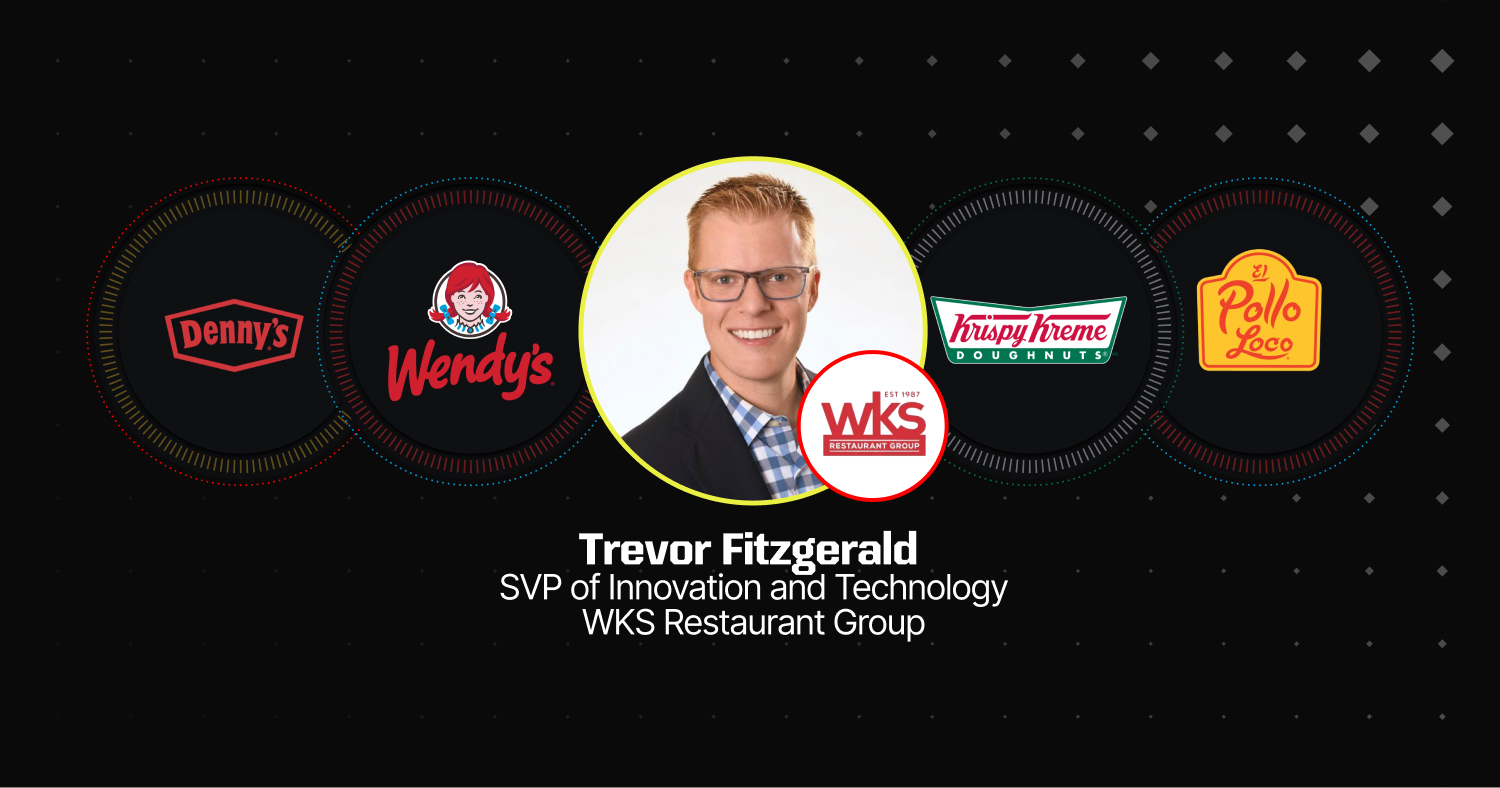
We recently sat down with Trevor Fitzgerald, SVP of IT at WKS Restaurant Group—one of the largest franchise operators in the country, running almost 400 Wendy's, Krispy Kreme, El Pollo Loco, and Denny's locations. We talked about how his team evaluates new technology, where AI is actually delivering ROI, and why restaurants are harder to support than most people realize.
You run IT for a company operating 380 restaurants, but you mentioned your team is relatively small. How does that work?
First, we only hire exceptionally creative individuals who enjoy building—problem solvers and technologists. We have about 13-14 people, which sounds small for our scale, but it's intentional. We use vendors for a lot of things because we can't be in every restaurant every day. The trade-off is that we're reliant on partners, and very selective about what we build versus buy.
What makes us a bit unique is that we have a growing internal software team. I'd say around 200 restaurants, you start needing someone who can build custom tools. At 400, you definitely need it. My background is in software development, so when I joined, the owners knew I would emphasize the importance of building.
What kinds of tools have you built internally?
A lot of it centers on HR and workforce management. While of course we view the guests in our restaurants as customers, we can also view our customers as our employees.
For example, we do marketing to get people to start their careers with us. We think about employee churn the way a SaaS company thinks about customer churn. What benefits are we offering? How do we retain people?
We have about 10,000 employees, but in past years we have hired 15,000 people per year--it’s gotten much better recently, thankfully! That's a massive volume for a small HR team to handle. So we've built tools to simplify time-punch processing, payroll workflows, onboarding—anything that helps us manage large numbers of people efficiently.
How do you decide what technology projects to invest in?
Our senior leadership team has set high standards. I believe IT has become a strategic partner for most departments and is considered an accelerator and efficiency machine. We want to invest in projects that drive sales, improve profitability, don’t sacrifice employee satisfaction, and are fun!
Can you share an example of a project that's delivered strong results?
Two come to mind. First, we rolled out voice AI at Krispy Kreme drive-thrus. We're saving almost 8 hours of labor per day at those locations—that's tens of thousands in annual value per restaurant. That's a promising return for the early adoption of a new technology.
The second is kiosks at El Pollo Loco. That was sponsored by the franchisor--and they built a great solution. While we didn't develop them ourselves, I'm proud of how we have executed. The technology only delivers value if it actually gets used, and that took real coordination between our IT and operations teams. We took some risks, replacing front-counter point-of-sale terminals, and employee and customer behavior changed quickly because of it.
You mentioned AI earlier. Is that overhyped in the restaurant space, or underestimated?
I think it's underestimated, actually—at least in terms of what's really being done. Restaurants and retail are typically slow adopters. You hear about consumer-facing AI applications, but a lot of the meaningful work is happening in corporate support functions.
We just started building a tool that uses generative AI to help restaurant teams analyze their P&L faster, set goals, create custom dashboards to track those goals, and then generate training specific to each general manager's unique challenges. Training that no one else sees except that one GM.
The AI part is actually pretty easy now. The hard part is wrangling the data, producing accurate results, and making it useful to restaurant teams.
What's the appetite for experimentation at WKS?
It's high, and a lot of that comes from our forward-thinking leadership team, who really believe in automation. We get requests from every department: "Can we do this? Could we try that?" Those are my favorite conversations to have!
We recently formed an automation team, and my directive to them is that only about 30% of their projects should make it to MVP stage. The rest should be discarded. You have to run a lot of POCs to find what sticks, and each experiment grows your capabilities for the next one.
What's something that's been harder than expected?
The restaurant environment itself. It's a harsh IT environment—it's hot, equipment gets abused, and the internet goes down. We lose credit card transactions sometimes when connectivity drops. We don't always get time-punch data when we need it.
Any technology we deploy has to survive those conditions and account for spotty connectivity. That's a real constraint that people outside the industry don't always appreciate, and can cause real frustration for our employees.
Looking ahead, what excites you most about technology in the restaurant industry?
I think we're at an inflection point. Restaurants have historically been slow adopters of new technology, but the tools available now are finally mature enough to deliver real value without requiring massive IT teams to support them.
What excites me is that we're moving beyond just "keeping the lights on" toward technology that genuinely transforms how restaurants operate. When you can give a general manager personalized training based on their specific P&L challenges, or save 8 hours of labor a day with voice AI at the drive-thru—that's not incremental improvement. That's a fundamentally different way of running a restaurant.
The companies that figure out how to wrangle their data and experiment quickly are going to pull ahead. And I think there's a real opportunity for franchise operators to lead that charge, not just follow what the franchisors are doing. We're small and nimble enough to try things, prove them out, and then bring those wins back to the broader brand. That's a fun position to be in.